
How to Grow Mushrooms at Home (Step-by-Step Beginner Guide)
Jaga
Growing mushrooms at home is simpler than it appears. With a basic setup and clean working habits, you can produce fresh mushrooms consistently in a small indoor space.
This guide explains the full process step by step and what you need to get started.
What You Need to Grow Mushrooms
1. Mushroom Culture
This is the starting point of your grow.
- Liquid culture (recommended): fast, reliable, beginner-friendly
- Spores: slower and less predictable
Liquid culture is generally the easiest option because it colonizes quickly and reduces the risk of contamination.
2. Substrate (Growing Medium)
Mushrooms grow on organic materials rather than soil. Common substrates include:
- Straw
- Hardwood sawdust
- Coco coir
- Grain (used to produce spawn)
Different species prefer different substrates. For example:
- Oyster mushrooms grow well on straw or sawdust
- Lion’s Mane prefers hardwood-based substrate
3. Containers or Grow Bags
You need a container to hold your substrate:
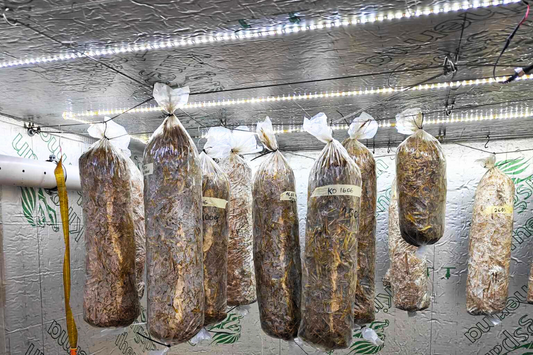
- Grow bags (recommended)
- Buckets or plastic containers
Grow bags are widely used because they simplify handling and help maintain cleanliness.
4. Clean Working Environment
Cleanliness is one of the most important factors in mushroom cultivation.
To reduce contamination:
- clean surfaces with alcohol
- use sterile tools
- avoid airflow and dust during inoculation
Even small improvements in cleanliness significantly increase success rates.
Step-by-Step Growing Process
Step 1: Prepare Your Substrate
- Hydrate the substrate
- Pasteurize or sterilize it depending on the method
The substrate should be moist but not wet, with no standing water.
Step 2: Inoculation
Introduce the mushroom culture:
- Add liquid culture to the substrate
- Mix evenly or inject at multiple points
- Work as cleanly as possible
Step 3: Colonisation
The mycelium begins to grow through the substrate.
Conditions:
- Temperature: 20–24°C (depending on species)
- Light: not required
- Duration: 1–3 weeks
The substrate will gradually turn white as it becomes fully colonized.
Step 4: Fruiting Conditions
After colonisation, adjust conditions to trigger mushroom growth:
- Provide light (around 12 hours per day)
- Ensure fresh air exchange
- Maintain high humidity (85–95%)
Step 5: Harvest
Mushrooms are ready when:
- caps are fully formed
- they are harvested before over-maturing
Harvest by cutting or gently twisting from the substrate.
Best Mushrooms for Beginners
Oyster Mushrooms
- fast growing
- very forgiving
- high success rate
Lion’s Mane
- grows well indoors
- distinctive appearance
- consistent results when conditions are stable
Common Beginner Mistakes
- Overwatering the substrate
- Poor hygiene during inoculation
- Insufficient fresh air
- Incorrect temperature
Avoiding these issues greatly improves outcomes.
Practical Tips
- Start with simple setups
- Use clean, reliable liquid culture
- Maintain stable environmental conditions
- Avoid overcomplicating the process
Consistency is more important than complexity.
Basic Starter Setup
A simple setup includes:
- Liquid culture
- Suitable substrate
- Grow bags or containers
- Alcohol for cleaning
- Basic sterile tools
This is enough to successfully complete a first grow.
Final Thoughts
Mushroom cultivation is scalable and repeatable once the basics are understood. Starting with simple methods allows you to gain experience and improve results over time.